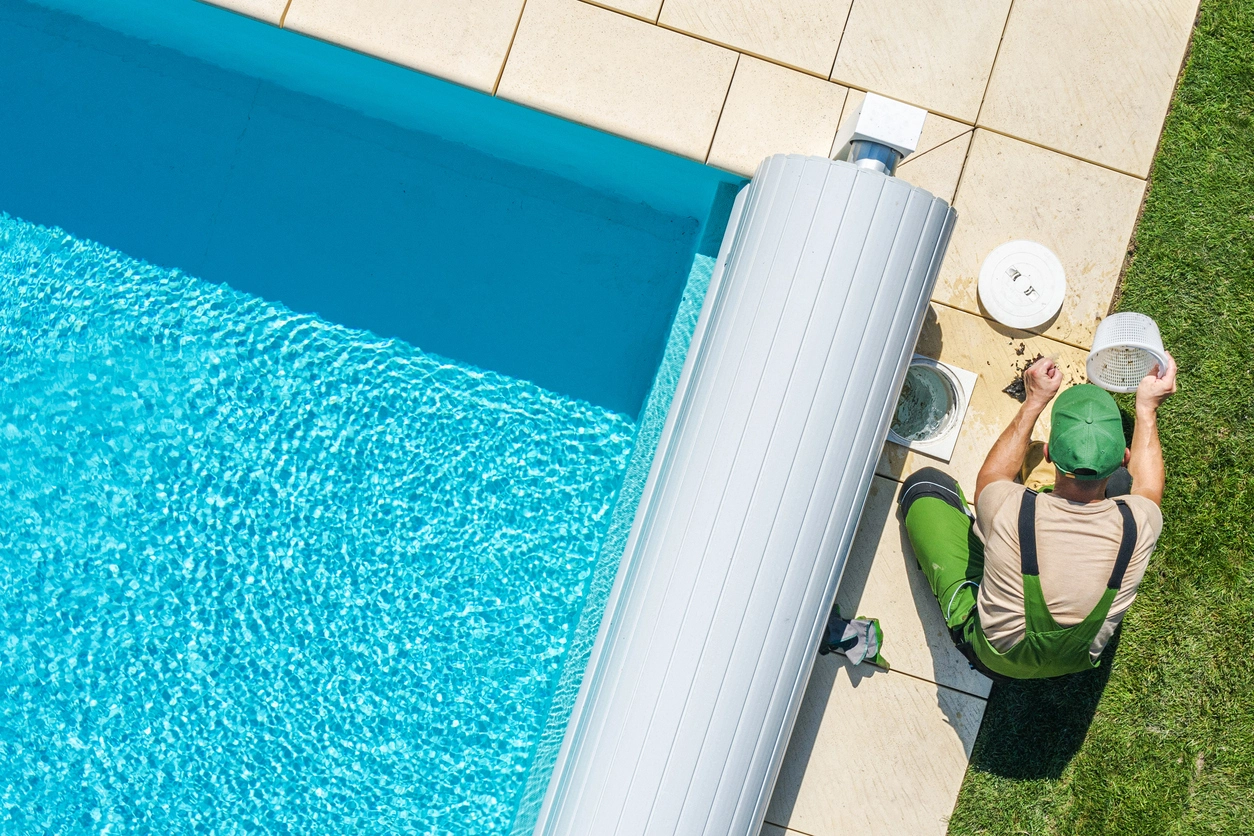
Your pool filter does a job most people never think about until something goes wrong. It is quietly pulling leaves, dirt, sunscreen and everything else out of the water, day after day. Keep it in good shape and your pool stays clear with minimal fuss. Neglect it, and you will notice cloudy water, a struggling pump, and higher chemical bills a lot sooner than you would like.
Here is what pool filter maintenance actually involves, how often you should be doing it, and the signs that tell you it is time to get in there.
Why filter maintenance matters more than people think
A dirty filter does not just let debris back into your pool, it also makes your pump work harder to push water through, which uses more electricity and puts extra strain on the whole system. Over time, a poorly maintained filter can shorten the life of your pump and even affect your heating efficiency, since warm water is being circulated less effectively.
If you have a pool and spa combination, this matters even more, since spa water tends to pick up more oils and lotions and puts extra demand on your filtration. Our guide on pool and spa combinations covers how the two systems typically work together.
The three main filter types, in brief
Most Melbourne homes run one of three filter types, and each has its own maintenance rhythm:
- Sand filters: Water passes through a bed of specialised sand that traps debris. Maintained through periodic backwashing.
- Cartridge filters: Water passes through a pleated cartridge element that physically catches particles. Maintained by removing and hosing down the cartridge.
- DE (diatomaceous earth) filters: The finest filtration of the three, using a powder coating on internal grids. Less common in home installations but very effective.
If you want the full step-by-step on cleaning sand and cartridge filters specifically, including how often to backwash and what to look for when rinsing a cartridge, our sand and cartridge filter maintenance guide walks through it in detail.
Signs your filter needs attention
You do not need to wait for a set date on the calendar. Your pool usually tells you when it is time:
- Cloudy or slightly hazy water, even after adding chemicals
- The pressure gauge on your filter reading higher than normal for your system
- Reduced water flow from your jets or returns
- A noticeable increase in how much chlorine or salt you are using to keep the water balanced
- Visible debris build-up around the skimmer box or in the pump basket
How often should you clean your pool filter?
As a general rule, sand filters need backwashing every 2-4 weeks during the swimming season, and cartridge filters typically need a clean every four to six weeks, though this depends heavily on how much the pool is used, how many trees are nearby, and whether pets swim regularly.
Demand on your filter picks up noticeably once the weather warms and the pool sees more use, so it is worth giving it a proper check as part of your seasonal routine. Our spring pool opening guide is a good place to start if you are getting the pool ready after winter, and covers filter checks alongside the rest of the reopening process.
If you are running your pool heating longer into the cooler months, your filter is working longer hours too. Our guide to pool heating in Melbourne explains what an extended season means for the rest of your equipment.
A few common mistakes worth avoiding
- Over-backwashing a sand filter: Backwashing too often wastes water and can wear the sand down faster than it needs replacing.
- Using a hose that is too high pressure on a cartridge: This can damage the pleats. A standard garden hose is usually all you need.
- Ignoring the pressure gauge: This is the easiest early warning sign, and the one most people forget to check.
- Ignoring salt or mineral build-up: If you run a salt or mineral system, mineral scale can build up on filter components over time and is easy to miss during a quick clean.
Make it easier on yourself with automation
If checking and adjusting your filtration schedule manually feels like a chore, it does not have to be. Modern systems can handle a lot of this for you. Have a look at our guide to pool automation to see how automated filtration cycles and smart monitoring can take the guesswork out of maintenance altogether.
When it is worth calling in a professional
Routine cleaning is well within reach for most pool owners, but if you are seeing consistently high pressure readings even after cleaning, or the filter media itself looks worn or damaged, it is worth getting a professional to take a look. Catching a filtration issue early is a lot cheaper than replacing a pump that has been working overtime for months.
Need a hand with your pool filtration system?
The team at Master Pools builds across South East Melbourne, Bayside, and the Mornington Peninsula, offering dedicated servicing exclusively for our pool builds. If your filter is due for a check, or you are weighing up what to look for in a new pool build, get in touch and we will point you in the right direction.